Introduction
The first time someone notices a strange feeling around the rectal area, it can be confusing and even a little scary. Maybe you feel a small lump when sitting down, or there’s itching and discomfort after using the bathroom.
At first, you might wonder if it’s something serious. Many people go online and type the same question: what does a hemorrhoid feel like?
The truth is, hemorrhoids are very common, and millions of people experience them at some point in life.
Understanding what they feel like can help you recognize the symptoms early and know when it’s time to take simple steps for relief.
Quick Answer:
A hemorrhoid usually feels like itching, swelling, soreness, or a small lump near the anus, sometimes with mild pain or bleeding during bowel movements.
What Does a Hemorrhoid Feel Like?
When people ask “what does a hemorrhoid feel like?”, they’re usually describing a set of uncomfortable sensations in the rectal area.
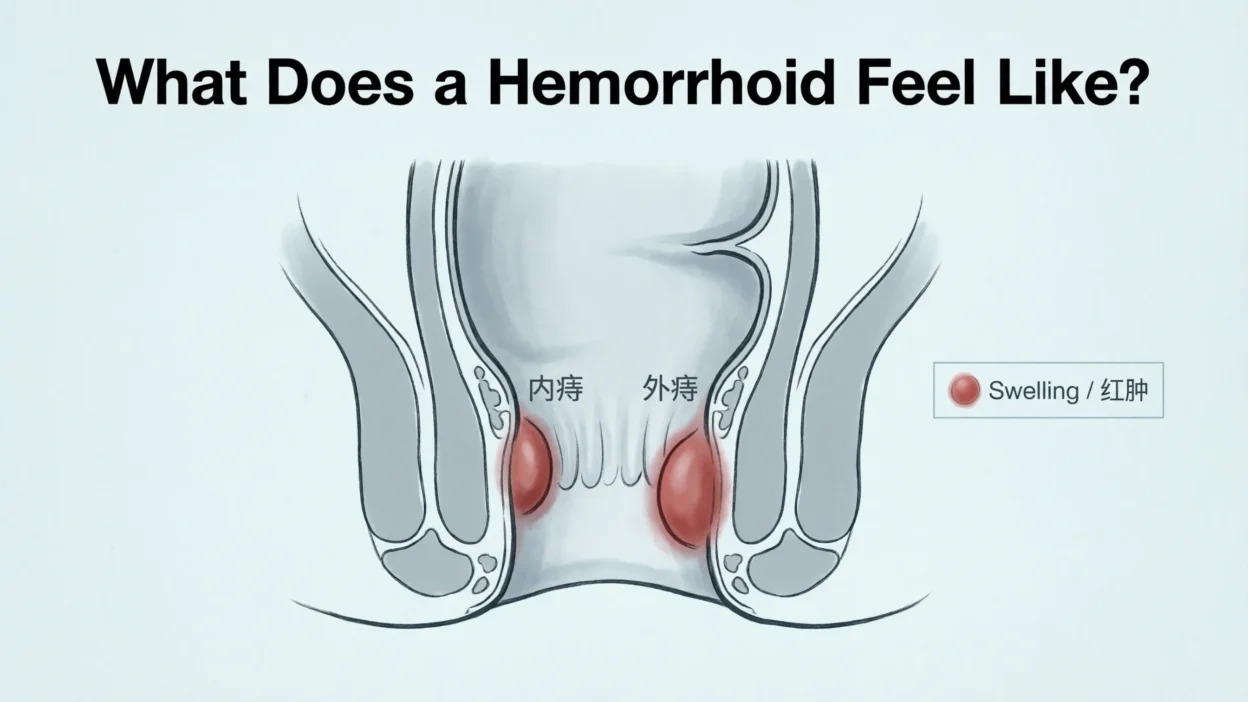
A hemorrhoid is a swollen vein in the lower rectum or anus. It’s similar to a varicose vein but located in a more sensitive area of the body.
Plain-English Explanation
The feeling can vary depending on the type and severity of the hemorrhoid. Some people barely notice them, while others feel clear discomfort.
Common sensations include:
- itching around the anus
- a soft lump near the opening
- pressure or fullness
- burning or irritation
- pain when sitting or during bowel movements
- bright red blood on toilet paper
Types of Hemorrhoids and How They Feel
Internal hemorrhoids
- located inside the rectum
- usually painless
- may cause bleeding during bowel movements
External hemorrhoids
- located under the skin around the anus
- may feel like a tender lump
- can cause itching, swelling, or pain
Thrombosed hemorrhoids
- contain a blood clot
- may feel very painful and swollen
Simple Example
Example sentence:
“i noticed a small painful lump when sitting, and it felt sore after using the bathroom.”
Bold Summary:
A hemorrhoid often feels like itching, swelling, or a tender lump around the anus, sometimes with pain or bleeding.
Where People Usually Notice Hemorrhoid Symptoms
Hemorrhoid symptoms usually appear during everyday activities, especially those related to sitting or bowel movements.
1. During or After Using the Bathroom
Many people first notice symptoms while passing stool or wiping. There may be itching, mild pain, or bright red blood on toilet paper.
2. Sitting for Long Periods
Sitting on a chair for long periods can make hemorrhoids feel more uncomfortable or swollen.
3. Physical Pressure or Straining
Straining during bowel movements can cause swelling in the veins, making hemorrhoids more noticeable.
4. After Exercise or Heavy Lifting
Activities that increase pressure in the abdomen may make symptoms worse temporarily.
5. During Pregnancy
Pregnancy can increase pressure on the veins in the pelvic area, making hemorrhoids more common.
Tone and Nature of the Sensation
- physical discomfort rather than severe pain (in most cases)
- often itchy or irritated
- usually temporary and treatable
Real-Life Conversation Examples
Here are some realistic ways people might talk about what a hemorrhoid feels like.
- “i think i might have a hemorrhoid because it feels itchy after i use the bathroom.”
- “there’s a small lump and it hurts when i sit down.”
- “it doesn’t hurt much, but it feels swollen back there.”
- “i noticed a little blood on the toilet paper today.”
- “it feels like pressure when i go to the bathroom.”
- “the itching is really annoying today.”
- “sitting for too long makes it feel worse.”
- “it feels like a sore bump near the opening.”
These examples show how people casually describe their symptoms.
When to Pay Attention to Hemorrhoid Symptoms
Most hemorrhoids are mild and improve with simple care. However, it’s important to know when to monitor the symptoms.
Do
- notice mild itching or swelling
- expect discomfort after straining during bowel movements
- try lifestyle changes like more fiber and water
Don’t Ignore
- heavy bleeding
- severe pain
- symptoms that last several weeks
- large swelling or hard lumps
Quick Comparison Table
| Context | Example Phrase | Why It Works / Doesn’t Work |
|---|---|---|
| mild itching | “it feels itchy after using the bathroom.” | common early symptom |
| small lump | “i can feel a soft bump.” | typical external hemorrhoid |
| bleeding | “there’s bright red blood on the tissue.” | common but should be monitored |
| severe pain | “it hurts a lot when sitting.” | may need medical advice |
Similar Conditions That May Feel Like Hemorrhoids
Sometimes other conditions can feel similar, so people may confuse them with hemorrhoids.
| Condition | Meaning | When It’s Not the Same |
|---|---|---|
| anal fissure | small tear in the anal lining | usually causes sharp pain |
| skin tag | small piece of extra skin | usually painless |
| rectal irritation | inflammation of the skin | may come from hygiene products |
| abscess | infection under the skin | often very painful |
Understanding the difference helps people know when to seek medical advice.
FAQ: What Does a Hemorrhoid Feel Like?
1. Are hemorrhoids painful?
Many hemorrhoids cause mild discomfort or itching, but external or thrombosed hemorrhoids can be painful.
2. Can you feel a hemorrhoid with your finger?
Yes. External hemorrhoids may feel like a soft or swollen lump near the anus.
3. Do hemorrhoids always bleed?
No. Some hemorrhoids do not bleed at all, especially external ones.
4. How long do hemorrhoids usually last?
Mild hemorrhoids often improve within a few days to a week with proper care.
5. What makes hemorrhoids worse?
Common triggers include:
- straining during bowel movements
- sitting too long
- low-fiber diets
- dehydration
6. Can hemorrhoids go away on their own?
Yes. Many hemorrhoids shrink and heal naturally with rest, hydration, and fiber.
7. When should someone see a doctor?
If there is heavy bleeding, severe pain, or symptoms lasting more than two weeks, medical advice is recommended.
Final Thought
So, what does a hemorrhoid feel like? Most people describe it as itching, swelling, pressure, or a small lump near the anus. Sometimes there may also be mild pain or bleeding during bowel movements.
While the sensation can feel uncomfortable or worrying at first, hemorrhoids are very common and often improve with simple lifestyle changes like eating more fiber, drinking water, and avoiding straining.
Understanding the symptoms helps you recognize the problem early and take steps to relieve the discomfort quickly.