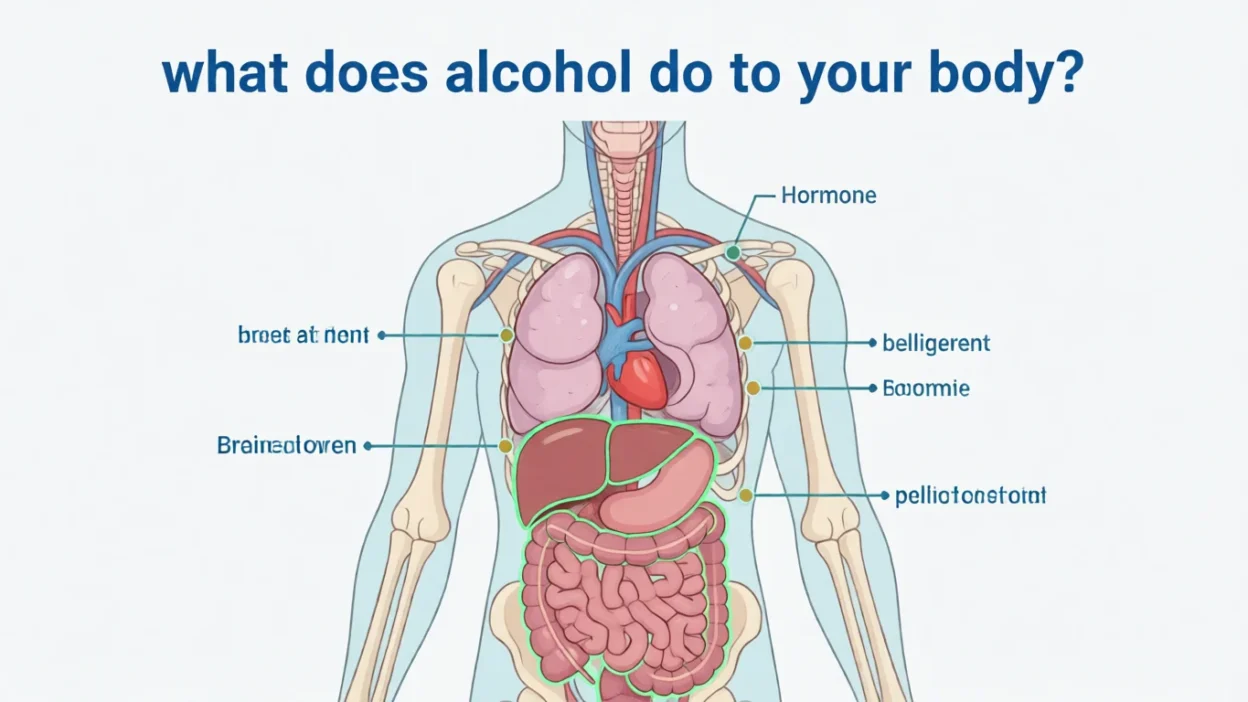
The first time many people really think about what does alcohol do to your body? isn’t in a science class.
It’s usually after seeing a tweet about “hangxiety,” a group chat joke about a bad headache, or a late-night comment saying, “never drinking again.” You might laugh it off, but a small question sticks in your head.
We see alcohol everywhere—parties, reels, memes, and casual chats. Some people say it helps them relax. Others warn it messes with your body.
That mix of opinions makes people curious. So let’s slow it down, keep it simple, and explain what’s actually going on inside your body when alcohol enters the picture.
Quick Answer:
Alcohol affects almost every part of your body by slowing your brain, stressing your liver, dehydrating you, and changing how your body works short- and long-term.
What Does Alcohol Do to Your Body? (Meaning Explained Clearly)
Alcohol is a chemical substance called ethanol. It’s found in drinks like beer, wine, and liquor.
In plain English, alcohol is a depressant. That means it slows things down inside your body. Once you drink it, alcohol moves quickly from your stomach into your bloodstream and reaches your brain within minutes.
People use alcohol because it can:
- make them feel relaxed
- lower stress for a short time
- help them feel social
Example sentence:
“I didn’t realize what alcohol does to your body until I learned how it affects your brain and liver.”
Bold summary: Alcohol slows your body systems and affects your brain, organs, and overall health.
How Alcohol Moves Through Your Body
When you drink alcohol, your body treats it like a toxin. Here’s what happens step by step:
- it enters your stomach and small intestine
- it goes into your bloodstream
- your liver works to break it down
- your brain feels the effects first
Your liver can only process a small amount per hour, which is why drinking fast hits harder.
What Alcohol Does to Your Brain
Your brain is one of the first places alcohol affects.
Short-term effects
- slower reaction time
- poor judgment
- trouble focusing
- mood changes
This is why people text things they regret or make risky choices after drinking.
Long-term effects
- memory problems
- difficulty concentrating
- higher risk of mental health issues
Alcohol changes how brain cells talk to each other, especially with repeated use.
What Alcohol Does to Your Liver
Your liver works hardest when you drink.
- it breaks down alcohol
- it filters toxins
- it repairs damage
Too much alcohol over time can lead to:
- fatty liver
- liver inflammation
- liver disease
The liver doesn’t complain loudly at first, which is why damage can sneak up quietly.
What Alcohol Does to Your Heart and Blood
Alcohol affects your heart and circulation too.
- raises blood pressure
- changes heart rhythm
- weakens heart muscles over time
Small amounts may seem harmless, but regular drinking increases health risks.
What Alcohol Does to Your Stomach and Digestion
Alcohol irritates your digestive system.
You may notice:
- nausea
- acid reflux
- stomach pain
It also affects how your body absorbs vitamins and nutrients, leaving you tired and weak.
What Alcohol Does to Sleep and Energy
Alcohol can make you sleepy at first, but it hurts sleep quality.
- you wake up more
- deep sleep is reduced
- you feel tired the next day
That “I slept but I’m exhausted” feeling is common after drinking.
Where This Term Is Commonly Used Online
The phrase “what does alcohol do to your body?” is often seen in:
- social media health posts
- comment sections
- wellness videos
- online forums
- group chats after parties
Tone
The tone is usually neutral to casual, especially in online chat meaning and social media slang discussions about health.
Realistic Conversation Examples (Modern Chat Style)
Here’s how people talk about this in real chats:
- “bro what does alcohol do to your body fr”
- “my head hurts so bad today”
- “never drinking on a work night again”
- “hangovers hit different now”
- “why am i so tired after one drink”
- “alcohol messes with sleep”
- “my stomach hates me rn”
- “i need water not wine”
- “learning this the hard way”
When to Use and When Not to Use This Term
✅ Do use it when:
- talking about health
- asking genuine questions
- sharing educational info
- discussing wellness online
❌ Don’t use it when:
- making medical diagnoses
- judging others
- spreading fear
- oversimplifying health facts
Comparison table
| context | example phrase | why it works / doesn’t |
|---|---|---|
| health chat | “what does alcohol do to your body?” | informative |
| casual joke | “alcohol ruined me” | vague |
| medical advice | “alcohol caused this disease” | misleading |
Similar Terms and Alternatives People Use Online
People don’t always say the full phrase. Here are common alternatives:
| term | meaning | when to use |
|---|---|---|
| hangover | after-effects of drinking | casual chat |
| hangxiety | anxiety after drinking | social media |
| alcohol effects | general impact | neutral |
| drinking damage | long-term harm | educational |
| body reaction | physical response | informal |
These are common in texting culture and informal chat spaces.
Common Misunderstandings About Alcohol
Many people believe:
- alcohol helps sleep (it doesn’t long-term)
- beer is “lighter” than liquor (alcohol is alcohol)
- hydration doesn’t matter (it does)
Understanding what alcohol does to your body helps clear up these myths.
FAQs About What Does Alcohol Do to Your Body?
1. Does alcohol damage the body right away?
Small amounts cause short-term effects, but damage builds over time.
2. Is alcohol worse for the brain or liver?
Both are affected, but the liver handles most damage.
3. Why do hangovers happen?
Dehydration, inflammation, and poor sleep play big roles.
4. Does age change alcohol effects?
Yes. Effects feel stronger as you get older.
5. Is occasional drinking safe?
Moderation matters, but no amount is completely risk-free.
6. Why do people feel relaxed at first?
Alcohol slows the nervous system temporarily.
7. Can alcohol affect mental health?
Yes. It can increase anxiety and low mood.
Alcohol and Modern Digital Conversations
In today’s online world, alcohol is often talked about through:
- memes
- reels
- jokes
- short posts
But behind the humor is a real curiosity about health. People are asking better questions and sharing experiences more openly than before.
Final Thought
So, what does alcohol do to your body? It slows your brain, stresses your organs, disrupts sleep, and affects how you feel both now and later.
While alcohol is common in social settings, understanding its effects helps you make smarter choices. In modern digital communication, learning the facts behind everyday habits is more important than ever. Knowledge doesn’t mean judgment—it means awareness.


