The first time many people hear the term “blue collar”, it’s usually not in a textbook. It might pop up in a tweet, a group chat, or a comment under a viral video about work life.
Someone says, “he’s blue collar,” and suddenly everyone seems to understand—except you. Is it about shirts? Is it an insult? Or is it a compliment? If you’ve ever paused mid-scroll wondering what blue collar actually means, you’re not alone.
This term has been around for decades, but it’s still widely used today in casual chats, online debates, and social media posts about jobs and lifestyles.
Quick Answer:
Blue collar means jobs that involve physical, hands-on work, often in trades, factories, or skilled labor.
What Does Blue Collar Mean? (Clear Meaning Explained)
Blue collar does not stand for a longer phrase. It comes from history.
In simple terms, blue collar refers to:
- people who do manual or physical work
- jobs that are hands-on
- work that often involves tools, machines, or labor
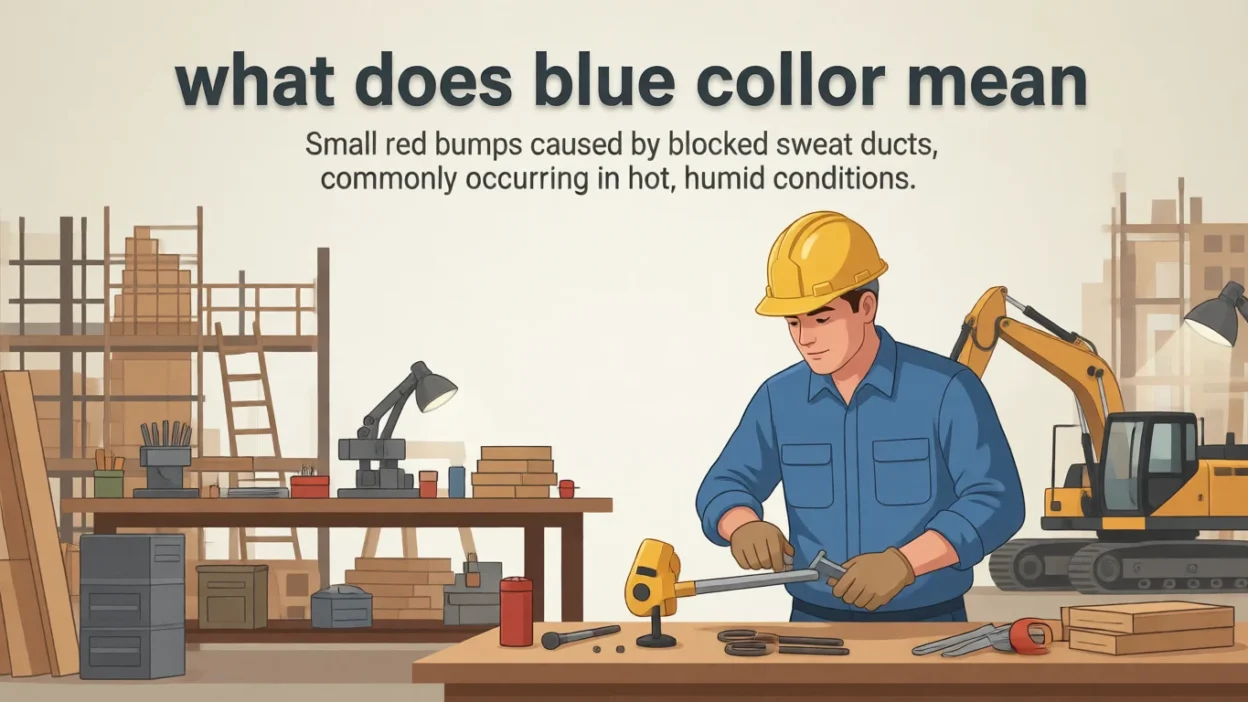
The term comes from the past when workers wore blue shirts or uniforms because they hid dirt and grease better than white clothes.
People use the term blue collar to:
- describe job types
- talk about work culture
- explain lifestyles or values
Example sentence:
“my dad worked a blue collar job in construction for 30 years.”
Bold summary: Blue collar means physical, hands-on jobs like construction, factory work, and skilled trades.
Common Blue Collar Jobs (Easy Examples)
Blue collar work covers many roles.
Typical blue collar jobs include:
- construction workers
- electricians
- plumbers
- mechanics
- factory workers
- truck drivers
- welders
- maintenance workers
These jobs often require:
- physical effort
- skill training
- real-world experience
They may not always need college degrees, but they do require skill and hard work.
Where the Term “Blue Collar” Is Commonly Used
You’ll see blue collar mentioned in many online and offline places.
Common places:
- text messages
- social media posts
- comments and debates
- online forums
- news articles
- job discussions
Tone of the term:
- usually neutral
- sometimes respectful
- can be casual
- rarely formal
In most cases, blue collar is not an insult. It’s a descriptive term.
Realistic Conversation Examples Using “Blue Collar”
Here are natural chat-style examples written in lowercase.
- “he works blue collar, long hours but good pay”
- “my family is mostly blue collar workers”
- “blue collar jobs are so underrated”
- “he went straight into blue collar work after school”
- “this town is full of blue collar people”
- “blue collar life isn’t easy but it’s honest”
- “she’s proud of her blue collar roots”
- “blue collar work keeps the country running”
- “i respect blue collar workers so much”
When to Use “Blue Collar” (and When Not To)
Knowing how to use the term matters.
✅ When to Use It
- talking about job types
- discussing work culture
- explaining career paths
- casual conversations
❌ When Not to Use It
- as an insult
- to judge intelligence
- in a disrespectful tone
- when you don’t know the context
Comparison Table
| context | example phrase | why it works or not |
|---|---|---|
| job talk | “he has a blue collar job” | accurate |
| social post | “proud blue collar worker” | respectful |
| insult | “just blue collar” | disrespectful |
| formal report | “blue collar guy” | too casual |
Blue Collar vs White Collar (Simple Comparison)
People often compare blue collar to white collar.
| term | meaning |
|---|---|
| blue collar | physical, hands-on work |
| white collar | office or desk jobs |
| pink collar | service or care jobs |
| green collar | environmental jobs |
All types of work matter, and none are “better” than the others.
Similar Words or Alternatives to Blue Collar
Here are terms often used instead of or alongside blue collar.
| term | meaning | when to use |
|---|---|---|
| skilled labor | trained physical work | professional talk |
| tradespeople | plumbers, electricians | respectful |
| manual labor | physical work | neutral |
| working class | economic group | social discussions |
| labor workers | general term | broad use |
Each word has a slightly different tone, but they often overlap.
Common Misunderstandings About Blue Collar
Some people wrongly believe:
- blue collar means low skill
- blue collar means low pay
- blue collar means uneducated
In reality:
- many blue collar jobs require training
- some pay very well
- skill matters more than titles
Blue collar work is essential to daily life.
FAQs About What Does Blue Collar Mean
1. What does blue collar mean in simple words?
It means jobs that involve physical or hands-on work.
2. Is blue collar an insult?
No, not when used respectfully.
3. Are blue collar jobs important?
Yes, they are essential to society.
4. Do blue collar jobs pay well?
Many of them do, depending on skill and experience.
5. Is blue collar slang?
It’s an informal but widely accepted term.
6. Can blue collar be used online?
Yes, it’s common in social media and chats.
7. Is blue collar only for men?
No, people of all genders work blue collar jobs.
Why People Search “What Does Blue Collar Mean”
People look this up because:
- they see it used online
- it comes up in job discussions
- it appears in political or social posts
- they want to avoid misunderstanding
Understanding it helps people communicate better.
Blue Collar in Modern Digital Conversations
Even though the term is old, blue collar fits right into modern texting culture. It’s used in short replies, captions, and comments because it quickly explains a type of work and lifestyle. Knowing what it means helps you follow conversations without confusion.
Final Thought
So, what does blue collar mean? It refers to people who do physical, hands-on work like construction, factory jobs, and skilled trades.
The term is widely used in everyday conversations, social media, and online chats, usually in a neutral or respectful way.
Understanding this phrase helps you better connect with discussions about work, careers, and real-life experiences in today’s digital world.