
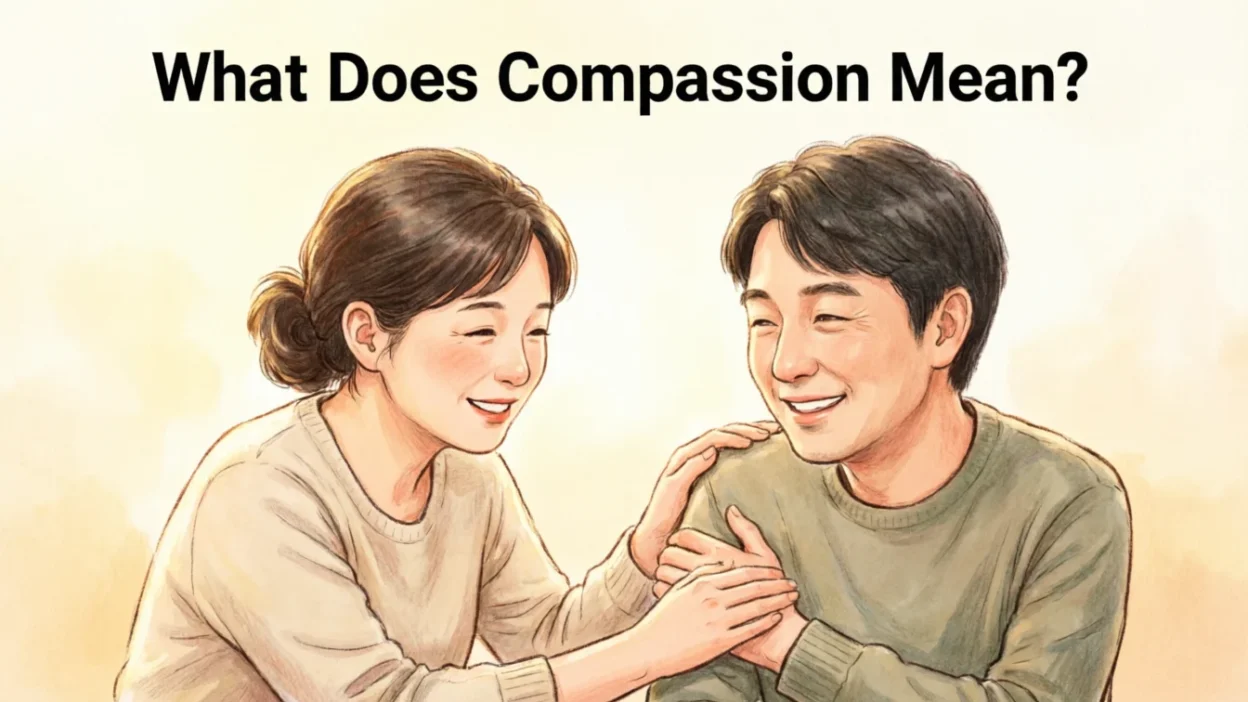
Introduction
The first time many people hear the word compassion might be in school, a movie, or during a serious conversation. Maybe a teacher says, “show compassion to others,” or a friend tells a story about someone helping a stranger in need.
At that moment, you might pause and think, what exactly does compassion mean? It sounds like kindness, but it feels deeper than that.
In everyday life, compassion is something we see when people care about others and try to help them during difficult moments.
Understanding the meaning of compassion can help us become better friends, coworkers, and members of our community.
Quick Answer:
Compassion means feeling concern for someone who is suffering and wanting to help them feel better.
What Does Compassion Mean?
When people ask “what does compassion mean?”, they are asking about a powerful human emotion that combines empathy, kindness, and the desire to help others.
Plain-English Explanation
Compassion happens when you notice someone else’s pain or struggle and genuinely want to help them. It’s more than just feeling sorry for someone. It includes taking action or showing care.
For example, if a friend is sad and you sit with them, listen, and support them, that is compassion.
Why People Use the Word Compassion
People often use the word compassion to describe:
- kind behavior toward someone in pain
- understanding another person’s feelings
- helping people who are struggling
- showing patience and care
Compassion is commonly discussed in areas like mental health, relationships, leadership, and community support.
Simple Example
Example sentence:
“she showed compassion by helping the injured dog and taking it to the vet.”
Bold Summary:
Compassion means caring about someone’s suffering and wanting to help them feel better.
Where the Word Compassion Is Commonly Used
The word compassion appears in many different areas of everyday life. It is often used in conversations about kindness and emotional understanding.
1. Everyday Conversations
People often talk about compassion when describing someone who is kind, caring, and supportive.
Example:
“he’s a very compassionate person.”
2. Schools and Education
Teachers often encourage students to show compassion toward classmates by being helpful and respectful.
3. Healthcare and Medical Settings
Doctors, nurses, and caregivers are expected to treat patients with compassion and understanding.
4. Social Media and Online Discussions
Online communities often encourage compassion when discussing sensitive topics or difficult situations.
5. Workplace and Leadership
In modern workplaces, leaders are encouraged to show compassion toward employees during stressful times.
Tone of the Word
- usually positive
- often emotional and supportive
- used in both casual and formal situations
Real-Life Conversation Examples
Here are some natural ways people might use the word compassion in conversation.
- “she showed real compassion when her friend was going through a tough time.”
- “i appreciate your compassion and support.”
- “we should show compassion to people who are struggling.”
- “the nurse treated every patient with compassion.”
- “he thanked everyone for their compassion during his difficult week.”
- “a little compassion can make a big difference.”
- “the teacher spoke with compassion to the upset student.”
- “the community showed compassion after the accident.”
These examples show how the word appears naturally in daily speech.
When to Use and When Not to Use the Word Compassion
Knowing when to use the word compassion helps people communicate more clearly and respectfully.
Do Use Compassion When
- talking about helping someone in pain
- describing kind and caring behavior
- discussing emotional support
Don’t Use Compassion When
- talking about neutral or unrelated topics
- describing strict rules or criticism
- discussing situations with no emotional concern
Quick Comparison Table
| Context | Example Phrase | Why It Works / Doesn’t Work |
|---|---|---|
| helping a friend | “she showed compassion when i was sad.” | shows emotional care |
| volunteering | “the volunteers acted with compassion.” | describes kindness |
| business report | “the numbers show compassion.” | doesn’t fit the context |
| strict discipline | “the punishment showed compassion.” | may not make sense |
Words Similar to Compassion
Several words are related to compassion. Each one has a slightly different meaning.
| Word | Meaning | When to Use It |
|---|---|---|
| empathy | understanding someone’s feelings | when you emotionally relate |
| sympathy | feeling sorry for someone | when showing concern |
| kindness | being friendly and generous | everyday positive behavior |
| mercy | forgiving someone or reducing punishment | legal or moral contexts |
| care | showing concern and support | casual or emotional settings |
While these words are similar, compassion usually includes both understanding and helping.
FAQ: What Does Compassion Mean?
1. Is compassion the same as kindness?
Not exactly. Kindness is being nice, while compassion includes understanding someone’s suffering and wanting to help them.
2. Is compassion an emotion or an action?
It can be both. Compassion begins as a feeling but often leads to helpful actions.
3. Why is compassion important?
Compassion helps build strong relationships, supportive communities, and better communication between people.
4. Can compassion be learned?
Yes. People can develop compassion by listening to others, practicing empathy, and helping those in need.
5. Is compassion used in professional settings?
Yes. Fields like healthcare, education, and leadership often emphasize compassionate behavior.
6. What is self-compassion?
Self-compassion means being kind to yourself during difficult times instead of being overly critical.
7. Do children understand compassion?
Yes. Children can learn compassion early by seeing examples of kindness and helping behavior.
Final Thought
So, what does compassion mean? At its core, compassion is about caring deeply when someone else is hurting and wanting to help them feel better. It combines empathy, kindness, and action.
In a world where people often face stress, challenges, and hardship, compassion can make a huge difference. A simple act of understanding or support can brighten someone’s day and strengthen relationships.
Whether in families, schools, workplaces, or online communities, compassion helps create a kinder and more supportive world.