The first time you see “dm me” in a comment section, it can feel confusing. You’re scrolling through Instagram or TikTok, someone asks a question, and the reply is just two letters: “dm.”
No explanation. No context. At first, you might think it’s slang, a shortcut, or even something secret. Then you notice it everywhere—texts, DMs (ironically), gaming chats, and online forums.
Friends say it casually, creators use it to move conversations private, and brands rely on it daily. That’s usually how most people learn new internet terms—by seeing them pop up again and again. So what does it really mean, and why is everyone using it?
Quick Answer
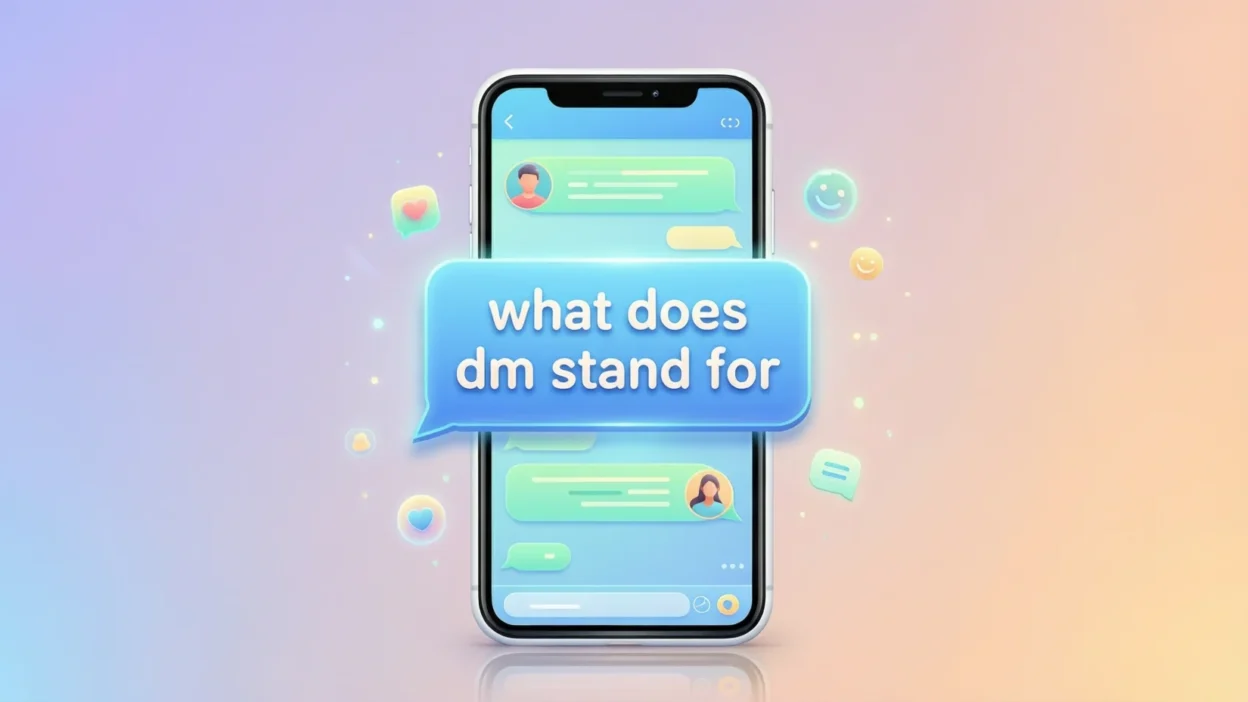
DM stands for “Direct Message,” which means sending a private message to someone online instead of posting publicly.
What Does DM Stand For?
DM is short for Direct Message.
Full Form
- DM = Direct Message
Plain-English Explanation
A direct message is a private conversation between two people (or sometimes a small group) on the internet. Unlike comments or posts that everyone can see, a DM is only visible to the sender and receiver.
Why People Use DM
People use DMs to:
- keep conversations private
- share personal info safely
- avoid cluttering public comments
- talk one-on-one
It’s fast, simple, and understood across platforms.
Short Example Sentence
Bold summary: DM means a private, one-on-one message sent directly to someone online.
Where Is the Term DM Commonly Used?
The term DM is everywhere in modern digital communication.
Common Platforms and Spaces
- texting apps
- twitter (x)
- tiktok
- discord
- gaming chats
- online forums
Even though the platforms differ, the meaning stays the same.
Tone of the Term
- casual
- informal
- sometimes neutral
DM is rarely used in formal writing. It’s part of everyday internet language.
Why People Prefer DMs Over Public Comments
Public comments are great for general discussion, but DMs are better when:
- information is personal
- details are sensitive
- conversations need privacy
- responses are long
That’s why you’ll often see replies like “check your dms” or “i’ll dm you.”
Realistic Conversation Examples (Lowercase)
Here’s how dm naturally appears in real online chats:
- “dm me and i’ll explain”
- “just sent you a dm”
- “can you dm the link?”
- “i don’t wanna post it here, dm me”
- “check your dms pls”
- “brands keep dm’ing me lately”
- “dm me your username”
- “he slid into my dms”
- “i’ll dm you later tonight”
These examples show how normal and casual the term is in texting culture.
When to Use DM and When Not to Use It
Knowing when to say DM matters.
✅ When You Should Use DM
- asking for private details
- continuing a personal conversation
- sharing links or files
- business inquiries on social media
- responding to comments discreetly
❌ When You Should NOT Use DM
- in formal emails
- in professional documents
- when public info is fine
- in serious official communication
Comparison Table
| context | example phrase | why it works or doesn’t |
|---|---|---|
| social media | “dm me for details” | works: common usage |
| texting | “i’ll dm you” | works: casual tone |
| work email | “please dm me” | doesn’t work: too informal |
| public info | “dm me the time” | unnecessary: could be public |
Similar Slang Words or Alternatives to DM
There are a few other terms people use that mean something similar.
Common Alternatives
| term | meaning | when to use it |
|---|---|---|
| pm | private message | older forums |
| inbox | message inbox | casual social media |
| message me | direct contact | clear and simple |
| slide into dms | start a private chat | informal/slang |
| private chat | one-on-one conversation | neutral |
While PM used to be more common, DM has become the dominant term across social media slang.
DM in Texting Culture
In modern texting culture, DM is more than just a feature—it’s a signal. It often means:
- “let’s talk privately”
- “this isn’t for public view”
- “i’ll explain one-on-one”
That’s why creators, influencers, and businesses rely heavily on DMs to build connections.
FAQ: Common Questions About DM
1. What does DM stand for in texting?
DM stands for Direct Message, meaning a private text sent online.
2. Is DM only for social media?
No. While popular on social media, it also applies to messaging platforms and forums.
3. Is DM formal or informal?
DM is informal and casual, not used in professional writing.
4. What does “slide into the dms” mean?
It means starting a private conversation, often casually or flirtatiously.
5. Can DM mean anything else?
In some contexts, DM can mean other things, but online it almost always means Direct Message.
6. Do all platforms call it DM?
Most do, but some use “message” or “chat” instead.
7. Is DM used by all age groups?
Yes. Teens, adults, and even businesses use the term daily.
Common Misunderstandings About DM
Some people think DM means:
- deleting messages
- group chats
- public replies
But DM is always about private communication.
Why DM Is So Popular Today
The rise of social media made private conversations more important. DMs allow people to:
- connect safely
- communicate quickly
- avoid public pressure
That’s why the term has become a permanent part of online chat shorthand.
Final Thought
So, what does DM stand for? It stands for Direct Message, a private way to talk online without everyone watching.
From texting friends to running online businesses, DMs play a huge role in modern digital communication. Understanding this simple term helps you navigate social media, chats, and online culture with confidence.