
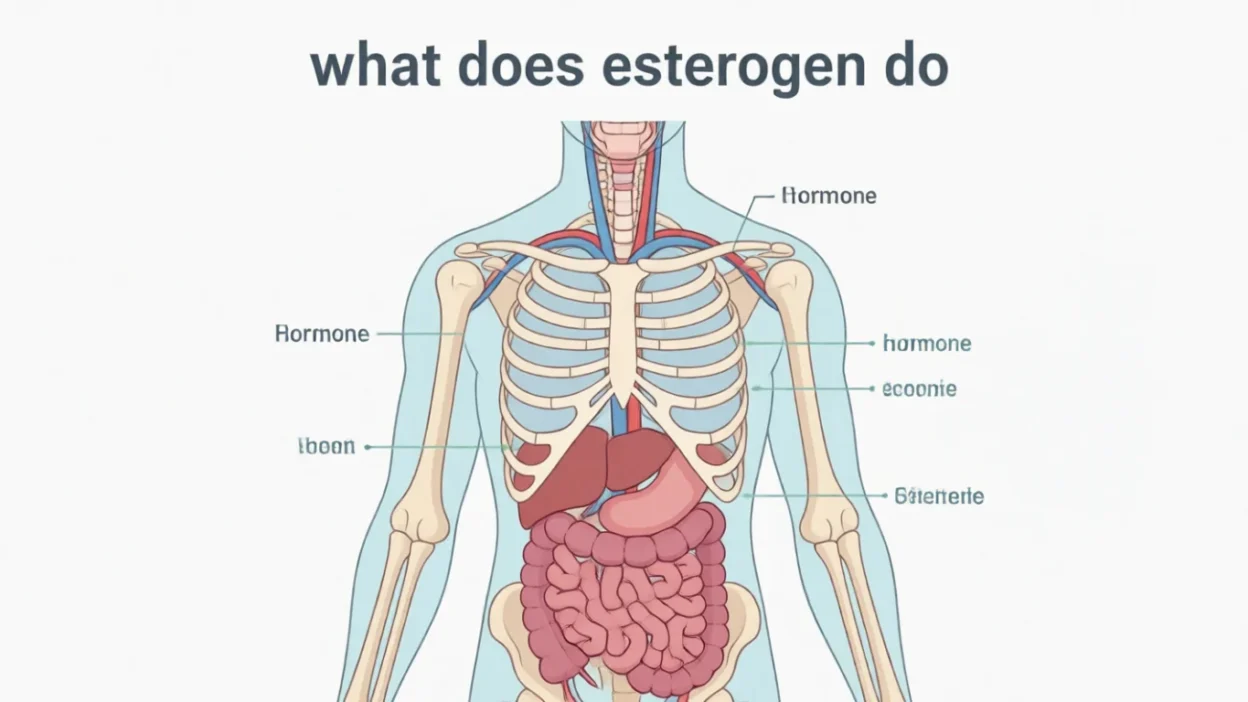
The first time many people hear the word estrogen, it’s usually not in a science class. It might pop up in a TikTok comment, a group chat, or a random tweet about hormones, mood swings, or puberty.
Someone might say, “estrogen is wild,” and suddenly you’re curious. You may have nodded along without really knowing what it does.
That curiosity is normal. Estrogen is mentioned everywhere—health videos, memes, conversations about periods, aging, or even workouts—but rarely explained in a simple way.
So people end up searching what does estrogen do to finally get a clear answer without medical jargon.
Quick Answer:
Estrogen is a hormone that helps control puberty, reproductive health, bone strength, mood, and many everyday body functions.
What Does Estrogen Do? (Meaning Explained in Simple Terms)
Estrogen is a hormone, which means it’s a chemical messenger in the body. There is no full form like an abbreviation—estrogen is the name itself.
In plain English, estrogen helps tell different parts of the body how to grow, change, and stay balanced. While it’s often called a “female hormone,” all genders have estrogen. The difference is how much and what it affects.
People ask what does estrogen do because this one hormone plays a role in so many things—physical changes, emotions, energy levels, and long-term health.
Example sentence:
“i didn’t realize what estrogen does until i started learning about hormones.”
Bold summary: Estrogen is a hormone that supports growth, balance, and many key body functions.
What Estrogen Does in the Body (Plain-English Breakdown)
Estrogen works in many areas of the body. Here’s a simple look at its main jobs.
1. Puberty and Body Development
Estrogen helps guide:
- breast development
- body shape changes
- growth during puberty
2. Reproductive Health
It plays a major role in:
- menstrual cycles
- ovulation
- fertility
3. Bone Strength
Estrogen helps keep bones strong and dense. Lower levels can lead to weaker bones over time.
4. Mood and Brain Function
Estrogen affects brain chemicals that influence:
- mood
- focus
- emotional balance
5. Skin and Hair
It helps support:
- skin elasticity
- hair growth
- moisture levels
This wide range of effects explains why estrogen comes up so often in health conversations.
Where the Term “Estrogen” Is Commonly Used Online
Unlike slang, estrogen is a real medical term, but it’s widely used in casual online spaces.
Common places you’ll see it:
- texting and group chats
- tiktok and instagram comments
- health and wellness videos
- reddit threads
- online forums
- dms between friends
Tone and style
The tone depends on context:
- casual/informal in social media and chats
- neutral in educational content
- formal in medical or academic settings
In texting culture, people often mention estrogen casually without full explanations.
Realistic Conversation Examples (Modern Chat Style)
Here are natural, lowercase examples showing how estrogen comes up in real chats:
- “hormones are wild, estrogen especially”
- “learning what estrogen does explains a lot tbh”
- “my doctor mentioned estrogen levels today”
- “why does estrogen affect mood so much?”
- “i didn’t know everyone has estrogen”
- “estrogen imbalance is no joke”
- “this video finally explains estrogen simply”
- “no one taught us this in school”
- “health tiktok is teaching me more than class ever did”
When to Use the Term Estrogen (and When Not To)
✅ Do use it when:
- talking about health or hormones
- learning about puberty or aging
- discussing medical topics
- sharing educational content
❌ Don’t use it when:
- joking about serious health issues
- diagnosing yourself or others
- spreading misinformation
- oversimplifying medical advice
Context comparison table
| context | example phrase | why it works / doesn’t |
|---|---|---|
| casual chat | “estrogen affects mood a lot” | clear and accurate |
| health post | “what does estrogen do?” | educational |
| joke setting | “estrogen made me do it” | misleading |
Estrogen Levels: Too High or Too Low
People often ask what does estrogen do because they’re trying to understand symptoms.
Low estrogen may be linked to:
- irregular periods
- low energy
- mood changes
- bone weakness
High estrogen may be linked to:
- bloating
- mood swings
- headaches
- breast tenderness
Only medical testing can confirm levels, but understanding estrogen helps people ask better questions.
Similar Terms or Alternatives People Use
Here are related words people use when talking about estrogen:
| term | meaning | when used |
|---|---|---|
| hormones | body messengers | general talk |
| estrogen levels | amount in body | medical context |
| progesterone | another hormone | reproductive health |
| testosterone | hormone in all genders | balance discussions |
| hormonal balance | overall hormone health | wellness content |
These terms often appear together in online chats and health discussions.
FAQs About What Does Estrogen Do
1. Is estrogen only for women?
No. All genders have estrogen, just in different amounts.
2. Does estrogen affect mood?
Yes. It plays a role in emotional balance and brain chemistry.
3. What happens if estrogen is low?
Low levels can affect bones, mood, and reproductive health.
4. Is estrogen important after puberty?
Yes. It continues to support health throughout life.
5. Do teens talk about estrogen online?
Yes. Especially in educational and health-related spaces.
6. Is estrogen a slang term?
No. It’s a real medical term, but used casually online.
7. Can estrogen levels change?
Yes. Levels change with age, cycles, and life stages.
Why Estrogen Is Talked About So Much Online
Estrogen comes up often because:
- it affects daily life
- it connects to visible changes
- social media encourages health awareness
- people want simple explanations
In modern digital communication, complex health topics are being discussed more openly than ever.
Final Thought
So, what does estrogen do? In simple terms, it helps the body grow, stay balanced, and function smoothly. From puberty to bone strength to mood, estrogen plays a quiet but powerful role in everyday life.
In today’s social-media-driven world, more people are asking questions, sharing information, and learning together. Understanding estrogen doesn’t require a medical degree—just clear, honest explanations like this one.


