I first heard the question “what does fish oil do” when a friend dropped it in a group chat after buying a huge bottle of capsules online. Everyone had an opinion — “good for your brain,” “good for your heart,” “good for skin,” and even “good for mood.” It sounded like a magic pill.
That made me curious too. Was fish oil really that helpful, or just another health trend people repeat without knowing why? If you’ve seen fish oil mentioned in posts, comments, or health videos, this guide will make it simple and clear.
Quick Answer:
Fish oil gives your body healthy omega-3 fats that support your heart, brain, eyes, joints, and overall health.
What Does Fish Oil Do? Full Meaning in Simple Words
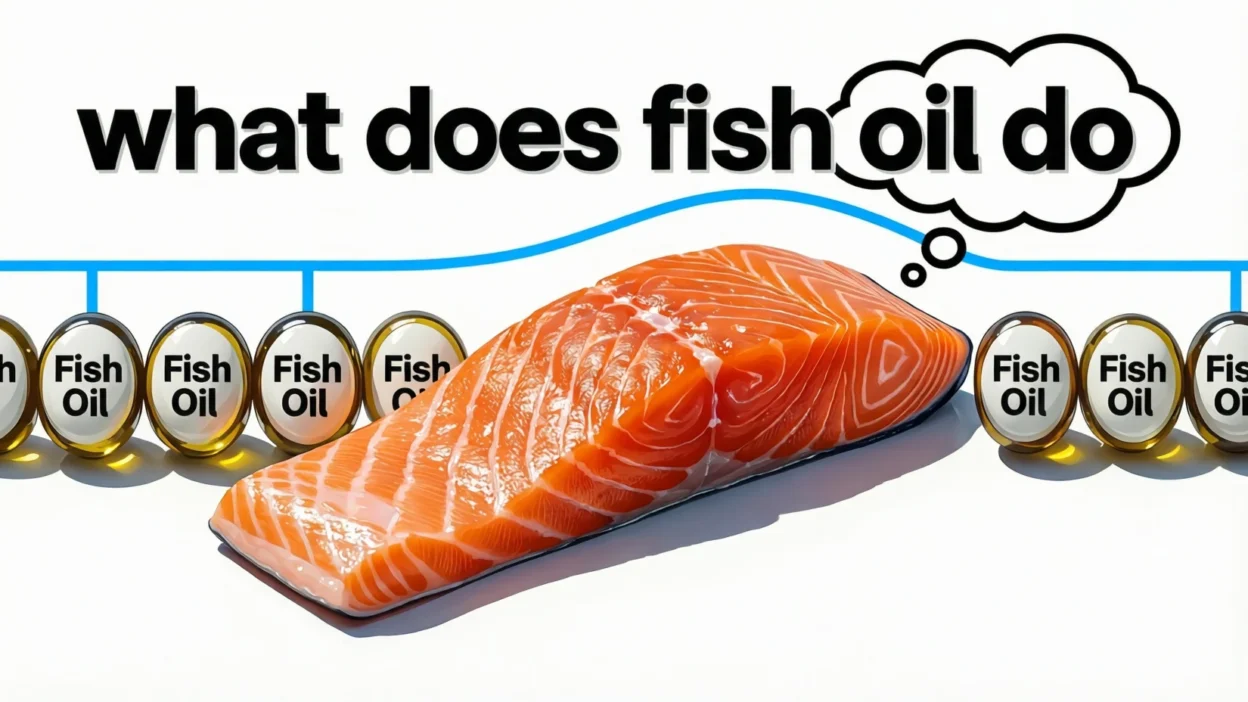
Fish oil is an oil taken from fatty fish like salmon, mackerel, and sardines. It is rich in omega-3 fatty acids, mainly EPA (eicosapentaenoic acid) and DHA (docosahexaenoic acid).
Let’s say that in plain English.
Your body needs certain fats to work well. Omega-3 fats are one of them. Your body cannot make enough omega-3 on its own, so you must get them from food or supplements. Fish oil is one of the easiest ways to get these fats.
So when people ask, what does fish oil do, they are really asking what omega-3 fats do inside the body.
Here’s what they help support:
- Heart health
- Brain function
- Eye health
- Joint comfort
- Inflammation balance
- Skin health
Example sentence:
“My doctor suggested fish oil to help support my heart and lower my triglycerides.”
Bold one-line summary:
Fish oil gives your body omega-3 fats that help your heart, brain, joints, and eyes work better.
How Fish Oil Works Inside the Body
To better understand what fish oil does, think of omega-3s as helper fats. They help cells work smoothly.
Your cells have outer walls made partly from fat. Omega-3 fats help keep those walls flexible and healthy. That helps signals move better between cells — especially in the brain and heart.
Fish oil is also known for helping manage inflammation. Inflammation is your body’s defense system, but too much of it can cause problems over time. Omega-3s help keep this response more balanced.
That’s why fish oil is often talked about in health articles, supplement guides, and wellness communities online.
Main Health Benefits People Mean When They Ask What Does Fish Oil Do
Heart Support
Fish oil is widely known for helping support heart health. It may help:
- Lower triglycerides (a type of blood fat)
- Support healthy blood flow
- Help maintain normal heart rhythm
That’s one big reason doctors often recommend it.
Brain and Memory Support
Your brain is made of a lot of fat — and DHA (from fish oil) is a major part of it.
Omega-3s help support:
- Memory
- Focus
- Brain development
- Mood balance
That’s why fish oil is often suggested for both kids and older adults.
Joint Comfort
Many people take fish oil for joint support. Omega-3s help with inflammation balance, which may help with:
- Joint stiffness
- Movement comfort
- Exercise recovery
Eye Health
DHA is also found in the retina of the eye. Getting enough omega-3s helps support normal eye function.
Skin Health
Some people use fish oil to support:
- Skin moisture
- Skin barrier health
- Reduced dryness
Where You’ll Commonly See Fish Oil Mentioned Online
Unlike texting slang or chat shorthand, fish oil is not a slang term. It’s a health and nutrition term. But you’ll see it used often in digital spaces.
Common places include:
- Health blogs
- Supplement reviews
- Fitness forums
- YouTube wellness channels
- Social media health posts
- Reddit nutrition threads
- Doctor Q&A sites
Tone: Usually neutral to semi-formal, but in social media posts it can be casual and friendly.
Example post style:
“started taking fish oil daily — let’s see if it helps my focus and joints.”
Realistic Conversation Examples About Fish Oil (Chat Style)
Here are natural, modern chat-style examples showing how people talk about fish oil online:
- “does fish oil really help your brain or is that hype?”
- “my doctor told me to add fish oil daily”
- “i started fish oil last month and my joints feel better”
- “anyone here take fish oil supplements?”
- “fish oil capsules are huge lol”
- “is fish oil good for skin too?”
- “i switched to algae omega instead of fish oil”
- “don’t forget to take your fish oil with food”
- “what does fish oil do exactly for the heart?”
When to Use and When Not to Use Fish Oil
Fish oil is helpful — but not everyone needs it, and not every situation calls for it.
✅ Do Use Fish Oil When
- You don’t eat fatty fish often
- Your doctor suggests omega-3 support
- You want heart health support
- You want general wellness support
- You are looking to balance omega-6 heavy diets
❌ Don’t Use Fish Oil When
- You are allergic to fish (unless doctor approves)
- You already get high omega-3 from diet
- You take blood thinners (without asking a doctor)
- You want a “quick cure” — it’s support, not magic
- You plan very high doses without guidance
Quick Context Table
| Context | Example Phrase | Why It Works / Doesn’t |
|---|---|---|
| doctor visit | “you should take fish oil daily” | works — medical guidance |
| fitness chat | “fish oil helps recovery” | works — wellness support |
| random mega dose | “i take 10 pills a day” | doesn’t work — unsafe without advice |
| fish allergy | “i’ll take fish oil anyway” | doesn’t work — risky |
Similar Supplements and Alternatives to Fish Oil
If you’re researching what fish oil does, you’ll also see these related terms.
| Supplement | Meaning | When Used |
|---|---|---|
| Omega-3 capsules | General omega-3 fats | Same goal as fish oil |
| Cod liver oil | Oil from cod liver | Omega-3 + vitamins A & D |
| Krill oil | Omega-3 from krill | Smaller capsules, often pricier |
| Algae oil | Plant-based omega-3 | Best vegan option |
| Flaxseed oil | Plant omega-3 (ALA) | Helpful but converts poorly |
| Chia seed oil | Plant omega-3 | Diet support, not equal to DHA |
Note: Plant omega-3 (ALA) is not the same as EPA/DHA. Your body must convert it, and conversion is low.
FAQ: What Does Fish Oil Do
1. What does fish oil do for the body?
Fish oil gives your body omega-3 fats that support heart, brain, joint, eye, and skin health.
2. Is fish oil good to take every day?
Many people take it daily, but dose matters. It’s best to follow label directions or doctor advice.
3. How long does fish oil take to work?
Some benefits (like triglyceride support) may take weeks to months. It’s a long-term support supplement.
4. Is fish oil only for older adults?
No. Adults of many ages use it. It’s also used for child brain development support — with proper dosing.
5. Can I just eat fish instead of taking fish oil?
Yes. Fatty fish like salmon, sardines, and mackerel are great natural sources of omega-3.
6. Are there side effects?
Some people notice:
- fishy burps
- mild stomach upset
- nausea if taken without food
Taking it with meals helps.
7. Is fish oil a slang or texting term?
No. Fish oil is a nutrition and supplement term — not texting slang or chat shorthand.
Final Thought
So, what does fish oil do in simple terms? It gives your body important omega-3 fats that help support your heart, brain, joints, eyes, and overall wellness.
It’s not a magic pill, but it can be a helpful part of a healthy routine — especially if you don’t eat much fatty fish. You’ll often see it discussed in health articles, supplement guides, and social media wellness posts.
The key is smart use, proper dose, and realistic expectations. Think of fish oil as daily support — not an instant fix.