
Introduction
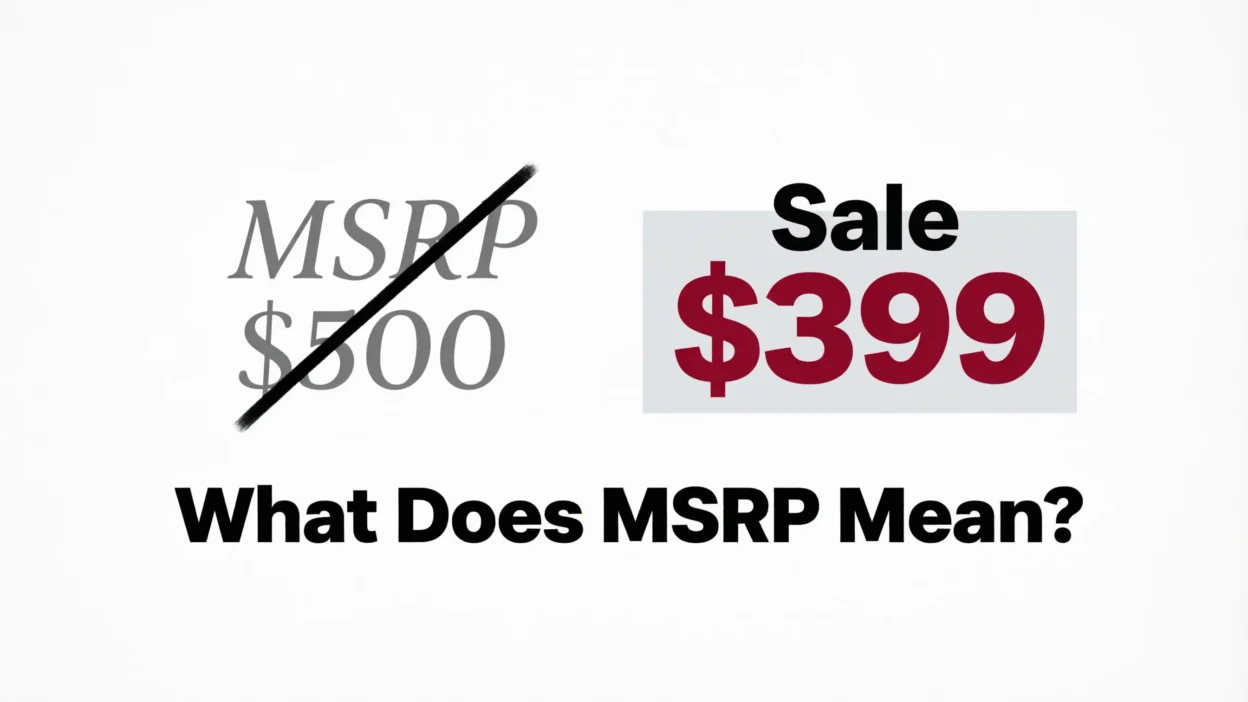
Imagine you’re shopping for a new phone, TV, or car online. You see two prices listed: one says MSRP, and the other shows a lower sale price. At first, it might feel confusing. Is MSRP the real price? Is it just a suggestion?
Many shoppers run into this situation when browsing online stores or product pages and start searching what does MSRP mean.
Understanding this term can actually help you make smarter buying decisions and recognize when you’re getting a good deal.
In this guide, we’ll explain the meaning of MSRP, why companies use it, and how it affects the prices you see while shopping.
Quick Answer:
MSRP stands for Manufacturer’s Suggested Retail Price, which is the price a manufacturer recommends that stores sell a product for.
What Does MSRP Mean?
When people ask “what does MSRP mean?”, they’re referring to a common pricing term used in retail and online shopping.
MSRP = Manufacturer’s Suggested Retail Price
Breaking Down the Term
- Manufacturer – the company that makes the product
- Suggested – a recommended price, not a required one
- Retail Price – the price customers pay in stores
Plain-English Explanation
MSRP is the recommended selling price set by the manufacturer. It’s the price companies suggest retailers charge for a product.
However, stores do not have to follow this exact price. Retailers may sell the product for more or less than the MSRP, depending on demand, sales, or competition.
Why Companies Use MSRP
Manufacturers provide an MSRP to:
- give customers a standard price reference
- help retailers price products consistently
- show shoppers when a product is discounted
For example, if a product’s MSRP is $500 but a store sells it for $400, customers can easily see they’re getting a deal.
Simple Example
Example sentence:
“the laptop has an msrp of $1,000, but the store is selling it for $850.”
Bold Summary:
MSRP means Manufacturer’s Suggested Retail Price, the price a manufacturer recommends stores charge for a product.
Where the Term MSRP Is Commonly Used
The abbreviation MSRP appears in many shopping and retail situations.
1. Online Stores
E-commerce websites often show MSRP next to the sale price so shoppers can compare prices.
Example:
MSRP: $200 — Sale Price: $150
2. Car Dealerships
The term is especially common when buying vehicles. The sticker price on a new car is often the MSRP.
3. Electronics and Tech Products
Manufacturers of phones, laptops, gaming consoles, and TVs frequently list an MSRP.
4. Retail Advertising
Stores sometimes advertise “below MSRP” to show customers they are offering discounts.
5. Product Reviews and Buying Guides
Review websites often mention MSRP to help readers compare prices across different stores.
Tone and Context
- usually neutral and informational
- common in shopping and retail discussions
- used in both formal and casual contexts
Real-Life Conversation Examples
Here are natural examples of how people might use the term MSRP in everyday conversation.
- “the phone’s msrp is $799, but i found it cheaper online.”
- “the dealership is selling the car below msrp.”
- “i always compare prices to the msrp before buying.”
- “this store is charging more than the msrp.”
- “during sales, products often drop well below msrp.”
- “the msrp gives you an idea of the normal price.”
- “the laptop launched with an msrp of $1,200.”
- “i waited for the price to fall under msrp.”
These examples show how shoppers discuss product pricing.
When to Use and When Not to Use the Term MSRP
Knowing how the term MSRP is used helps avoid confusion when discussing prices.
Do Use MSRP When
- comparing product prices
- discussing retail pricing
- talking about discounts or deals
Don’t Use MSRP When
- discussing used products
- talking about services instead of physical products
- referring to negotiated private prices
Quick Comparison Table
| Context | Example Phrase | Why It Works / Doesn’t Work |
|---|---|---|
| shopping online | “the msrp is $300.” | standard pricing reference |
| buying a car | “the dealership listed the msrp on the sticker.” | correct automotive use |
| used item sale | “the used phone msrp is $200.” | not accurate because it’s used |
| service pricing | “the haircut msrp is $50.” | msrp usually applies to products |
Similar Pricing Terms
Several pricing terms are related to MSRP. Understanding them can make shopping easier.
| Term | Meaning | When It’s Used |
|---|---|---|
| retail price | the price a store sells a product for | general store pricing |
| list price | the official price before discounts | retail and real estate |
| sale price | discounted price offered by the store | promotions and deals |
| invoice price | price retailers pay the manufacturer | mostly used in car sales |
| market price | price based on supply and demand | financial and product markets |
Among these terms, MSRP is the manufacturer’s recommended starting price.
FAQ: What Does MSRP Mean?
1. What does MSRP stand for?
MSRP stands for Manufacturer’s Suggested Retail Price, which is the price a manufacturer recommends retailers charge.
2. Is MSRP the final price you must pay?
No. Retailers can sell products above or below the MSRP depending on the market and promotions.
3. Why do stores show MSRP?
Stores show MSRP to help customers compare the original price with the sale price.
4. Is MSRP used for cars?
Yes. The sticker price on new vehicles often represents the MSRP.
5. Can you negotiate below MSRP?
Sometimes. Negotiation is common when buying cars or high-value products.
6. Does MSRP include taxes?
Usually no. Taxes, shipping, and other fees are often added separately.
7. Is MSRP always accurate?
MSRP is just a suggested price, so actual prices may vary between stores.
Final Thought
So, what does MSRP mean? It stands for Manufacturer’s Suggested Retail Price, which is the price a manufacturer recommends stores charge for a product.
While MSRP provides a helpful price reference, retailers can adjust their prices based on competition, sales, or market demand. That’s why you often see products selling below MSRP during promotions or discounts.
Understanding MSRP helps shoppers recognize good deals, compare prices across stores, and make smarter buying decisions.