
Introduction
The first time many people notice the smell of sulfur is in a strange place—maybe near a hot spring, a science lab, or even a bad-smelling egg in the kitchen.
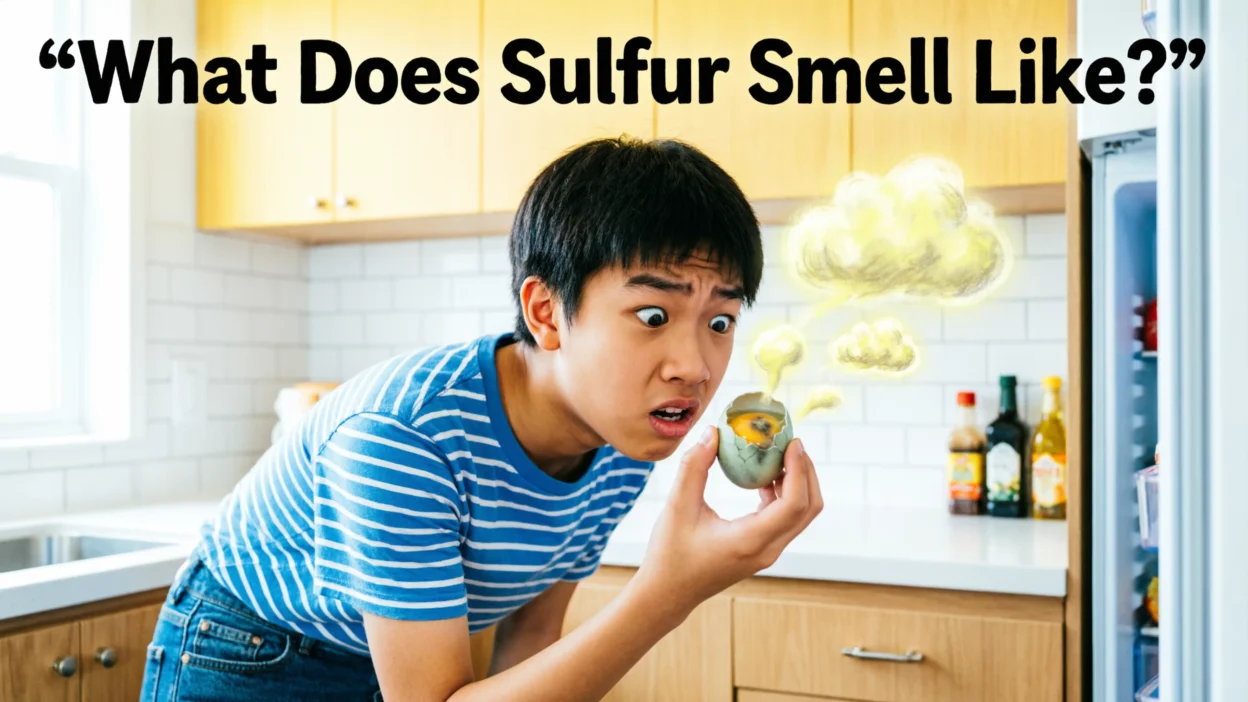
Imagine opening the fridge and suddenly catching a strong, unpleasant odor that reminds you of rotten eggs. You might wonder, what is that smell? Often, the answer people give is sulfur.
But what does sulfur actually smell like, and why is it so easy to recognize? In this guide, we’ll break down the smell of sulfur in simple terms and explain where you might notice it in everyday life.
Quick Answer:
Sulfur usually smells like rotten eggs—strong, sharp, and unpleasant.
What Does Sulfur Smell Like?
When people ask “what does sulfur smell like?”, the most common answer is rotten eggs. The smell is strong, sharp, and unpleasant, and most people can recognize it very quickly.
Interestingly, pure sulfur itself does not have a strong smell. The odor people associate with sulfur usually comes from sulfur compounds, especially a gas called hydrogen sulfide. This gas is what creates the famous rotten egg smell.
Plain-English Explanation
Think about the smell of an egg that has gone bad. That strong, sour, and slightly chemical odor is very similar to the smell of sulfur gases. Even a tiny amount in the air can be noticeable.
Why People Notice It So Easily
There are a few reasons sulfur smells stand out:
- Our noses are very sensitive to sulfur gases.
- Even very small amounts can produce a strong smell.
- The smell is very different from most everyday scents, so it’s easy to detect.
Simple Example
Example sentence:
“when we walked near the hot spring, there was a strong sulfur smell like rotten eggs.”
Bold Summary:
Sulfur is commonly described as smelling like rotten eggs because of sulfur gases such as hydrogen sulfide.
Where You Might Notice the Smell of Sulfur
The smell of sulfur can appear in several places in everyday life. Sometimes it’s natural, and other times it can signal a problem that needs attention.
1. Hot Springs and Volcanic Areas
Many natural hot springs and volcanic regions release sulfur gases from underground. These gases produce the classic rotten egg smell people notice when visiting these places.
The tone of the smell here is natural but strong, and it’s very common in geothermal locations.
2. Bad Eggs or Spoiled Food
If an egg goes bad, bacteria inside the egg produce hydrogen sulfide gas. That’s why spoiled eggs smell like sulfur.
This smell is unpleasant and a warning sign that the food is not safe to eat.
3. Water from Wells or Pipes
Sometimes tap water, especially from wells, can smell like sulfur. This happens when sulfur bacteria grow in water systems.
The smell may be mild or strong, and it’s often noticed when turning on the tap or running hot water.
4. Sewers and Drains
Sulfur smells may also come from drains, sewers, or plumbing systems. In these places, bacteria break down organic matter and release sulfur gases.
The smell is typically strong and unpleasant.
5. Natural Gas Safety Additives
Natural gas itself has no smell, but companies add sulfur-like chemicals called mercaptans to help people detect leaks.
This smell is intentionally strong to warn people of danger.
Tone of the Smell in Daily Life
- Usually strong and unpleasant
- Often used as a warning smell
- Common in natural environments and plumbing issues
Real-Life Examples of Sulfur Smell in Conversation
Here are some simple ways people might talk about the smell of sulfur in everyday conversation.
- “this water smells like sulfur. it’s like rotten eggs.”
- “did you smell that near the hot spring? it smells like sulfur.”
- “i think the egg went bad because it smells like sulfur.”
- “the basement drain has a sulfur smell today.”
- “when the volcano is active, the air smells like sulfur.”
- “the tap water smells like sulfur after running the hot water.”
- “that gas leak warning smell is similar to sulfur.”
- “the swamp had a strong sulfur smell.”
These examples show how people describe the smell naturally in conversation.
When to Notice the Smell of Sulfur (And When to Be Careful)
Sometimes the smell of sulfur is harmless, but other times it can signal a problem.
When the Smell Is Normal
Do:
- Notice sulfur smells near hot springs or geothermal areas
- Expect mild sulfur smells in natural environments
- Recognize it as a common description for rotten eggs
When the Smell May Be a Warning
Don’t ignore it if:
- Your home water suddenly smells like sulfur
- You smell sulfur near gas lines or appliances
- The smell is very strong indoors
Quick Comparison Table
| Context | Example Phrase | Why It Works / Doesn’t Work |
|---|---|---|
| hot spring | “it smells like sulfur here.” | normal in geothermal areas |
| spoiled egg | “this egg smells like sulfur.” | indicates the egg is bad |
| tap water | “our water smells like sulfur.” | may mean sulfur bacteria |
| gas leak smell | “it smells like sulfur in the kitchen.” | could signal a safety issue |
Words and Smells Similar to Sulfur
People often compare sulfur smells to other strong or unpleasant odors. Here are some common descriptions.
| Term | Meaning | When People Use It |
|---|---|---|
| rotten egg smell | classic sulfur odor | most common comparison |
| sulfurous smell | smell containing sulfur gases | scientific or descriptive writing |
| sewer smell | odor from drains or waste | plumbing or sewer systems |
| swamp smell | earthy and sulfur-like odor | wetlands or marshes |
| gas smell | warning smell added to natural gas | safety discussions |
These descriptions help people explain the odor in different contexts.
FAQ: What Does Sulfur Smell Like?
1. Does sulfur always smell like rotten eggs?
Not exactly. Pure sulfur has little smell, but sulfur gases like hydrogen sulfide create the rotten egg odor people recognize.
2. Why can humans smell sulfur so easily?
Our noses are very sensitive to sulfur compounds, so even tiny amounts in the air can produce a noticeable smell.
3. Is the smell of sulfur dangerous?
Sometimes. In small amounts it may just be unpleasant, but strong sulfur gas can be harmful, so it should not be ignored.
4. Why does my tap water smell like sulfur?
This can happen because of sulfur bacteria in water systems or minerals in groundwater.
5. Why do hot springs smell like sulfur?
Hot springs release natural underground gases, including hydrogen sulfide, which creates the sulfur smell.
6. Is sulfur used to make natural gas smell?
Yes. Gas companies add sulfur-like chemicals to natural gas so people can detect leaks quickly.
7. Can food smell like sulfur?
Yes. Foods like eggs, garlic, and onions contain sulfur compounds, which can create strong smells when they spoil or cook.
Final Thought
So, what does sulfur smell like? For most people, the easiest way to describe it is the strong, unpleasant smell of rotten eggs. This odor usually comes from sulfur gases like hydrogen sulfide rather than pure sulfur itself.
You might notice the smell in hot springs, spoiled eggs, plumbing systems, or certain natural environments. Sometimes it’s harmless, while other times it can signal something that needs attention, such as a water issue or gas leak.
Understanding the smell of sulfur helps you quickly recognize it in everyday life and know when it’s normal—and when it might be a warning.