The first time I saw vitamin B12 pop up in a chat, it was in a group message about feeling tired all the time. One friend said, “maybe you need b12,” and suddenly everyone started sharing supplements, reels, and health tips.
If you’ve ever seen vitamin B12 mentioned in texts, comments, or social media posts about energy or health and wondered what it actually does, you’re not alone.
It’s one of those nutrients people talk about a lot—but rarely explain clearly. So let’s break it down in a simple, friendly way that actually makes sense.
Quick Answer
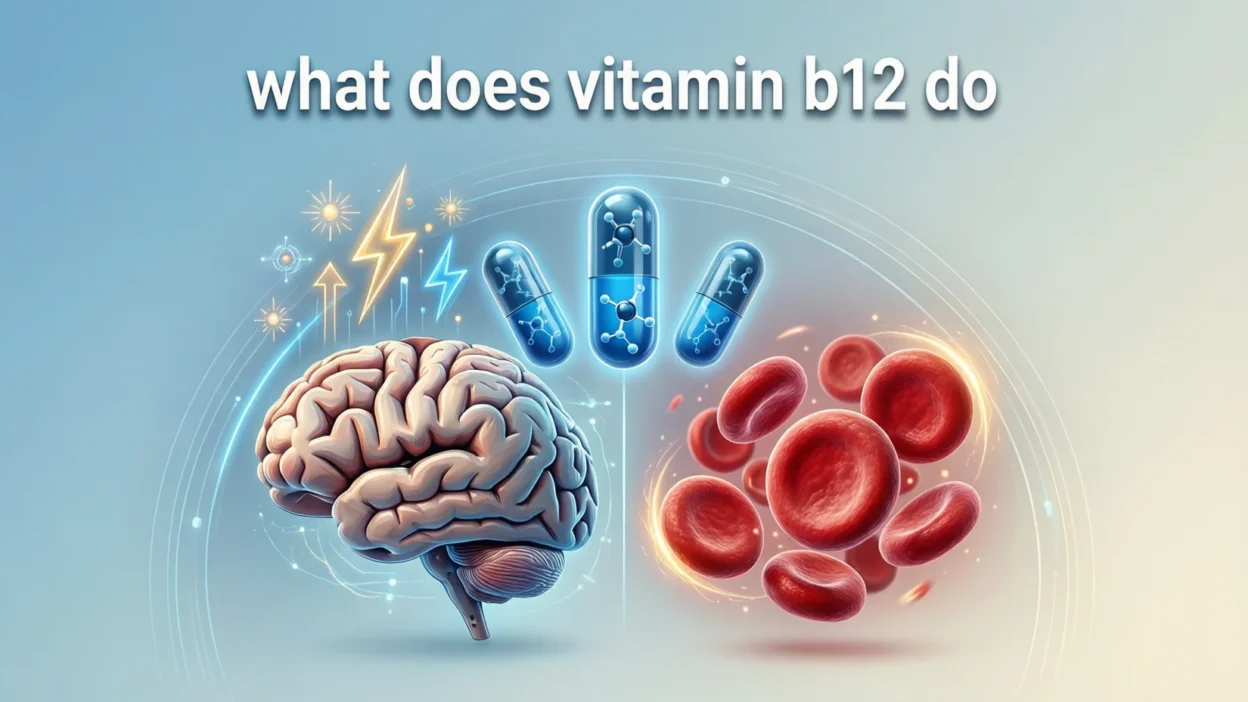
Vitamin B12 helps your body make energy, support your brain and nerves, and keep your blood cells healthy.
What Does Vitamin B12 Do? (Plain and Simple)
Vitamin B12, also called cobalamin, is an essential vitamin your body needs to work properly. “Essential” means your body cannot make it on its own—you must get it from food or supplements.
In plain English, vitamin B12 helps turn the food you eat into energy your body can use. It also keeps your brain sharp, your nerves working, and your blood healthy.
People talk about vitamin B12 a lot because low levels can make you feel tired, weak, foggy, or moody. That’s why it often comes up in online chats about energy, health, or feeling “off.”
Example sentence:
“i started taking b12 and i don’t feel as exhausted anymore.”
👉 In one line: Vitamin B12 helps your body make energy, protect your brain and nerves, and keep your blood healthy.
How Vitamin B12 Works in Your Body
Vitamin B12 plays several important roles at the same time. Think of it as a helper that keeps different systems running smoothly.
1. Helps Make Energy
B12 helps your body turn carbs, fats, and protein into usable energy. Without enough of it, you may feel tired even after resting.
2. Supports Brain Health
Your brain and nerves rely on vitamin B12 to send messages properly. Low levels can lead to brain fog, memory trouble, or slow thinking.
3. Keeps Nerves Healthy
Vitamin B12 protects the coating around nerves. This helps prevent tingling, numbness, or nerve pain.
4. Helps Make Red Blood Cells
B12 helps your body produce healthy red blood cells that carry oxygen. Low B12 can lead to anemia, which causes weakness and dizziness.
5. Supports Mood and Mental Health
B12 plays a role in making chemicals that affect mood. Low levels have been linked to feeling low or irritable.
Where You Commonly See “Vitamin B12” Mentioned Online
The term vitamin B12 is used widely in both casual and serious conversations online.
Common Places You’ll See It
- Text messages between friends talking about energy or tiredness
- Social media posts about wellness, supplements, or diets
- Comments on fitness or health videos
- DMs sharing health tips or advice
- Online forums about nutrition or vegan diets
- Gaming chats, when someone jokes about being low-energy
Tone of Use
- Mostly casual and informal
- Sometimes neutral in health discussions
- Rarely formal, unless in medical or educational content
Realistic Conversation Examples (Modern Chat Style)
- “i’m tired all the time lately, might be low on b12”
- “my doctor said my b12 was low”
- “does b12 actually help with energy?”
- “i started b12 supplements last week”
- “vegans really need to watch their b12”
- “low b12 explains why i felt so weak”
- “is b12 safe to take every day?”
- “my mom keeps telling me to take b12”
- “that brain fog might be b12 related”
When to Use and When Not to Use “Vitamin B12”
✅ When to Use It
- Talking about energy levels
- Discussing diet or supplements
- Sharing health experiences
- Asking for general nutrition advice
- Casual chats about feeling tired or weak
❌ When Not to Use It
- Giving medical advice without a doctor
- Making diagnoses
- Claiming it cures diseases
- Using it as slang unrelated to health
Quick Comparison Table
| Context | Example Phrase | Why It Works / Doesn’t |
|---|---|---|
| casual chat | “maybe you need b12” | works: friendly suggestion |
| health post | “b12 helps with energy” | works: general info |
| medical advice | “take b12 instead of meds” | doesn’t work: unsafe |
| joke | “i need b12 not sleep” | works: playful exaggeration |
Similar Terms and Alternatives You Might See
| Term | What It Means | When to Use It |
|---|---|---|
| b12 | short form of vitamin b12 | casual chats, texting |
| energy vitamins | vitamins that support energy | informal conversations |
| b-complex | group of b vitamins | supplement discussions |
| iron | another energy-related nutrient | comparing deficiencies |
| multivitamin | contains many vitamins | general health talk |
Who Is More Likely to Need Vitamin B12?
Some people talk about vitamin B12 more because they are at higher risk of low levels.
- Vegans and vegetarians (B12 is mostly in animal foods)
- Older adults
- People with digestive issues
- Those who feel tired, weak, or foggy
- People on certain medications
FAQ: What People Commonly Ask About Vitamin B12
1. What does vitamin B12 do for energy?
Vitamin B12 helps turn food into energy, so low levels can make you feel tired or weak.
2. Is vitamin B12 slang or a texting abbreviation?
No, it’s a real vitamin, but people often shorten it to b12 in texts and chats.
3. Can you take vitamin B12 every day?
Many people can, but it’s best to follow a doctor’s advice.
4. Is vitamin B12 only for adults?
No, it’s important for all ages, but needs vary.
5. Why do people talk about B12 so much online?
Because low B12 is common and linked to tiredness, brain fog, and diet trends.
6. Is vitamin B12 the same as caffeine?
No. B12 supports natural energy, while caffeine is a stimulant.
7. Can low B12 affect mood?
Yes, low levels may affect mood and mental clarity.
Final Thought
So, what does vitamin B12 do? In simple terms, it helps your body make energy, keeps your brain and nerves healthy, and supports your blood.
That’s why it shows up so often in texts, comments, and social media chats about feeling tired or run down. While it’s commonly talked about in casual, informal ways online, it plays a serious role in overall health.
Understanding what vitamin B12 does helps you make better choices—and avoid confusion—when you see it mentioned in modern digital conversations.